![[personal profile]](https://www.dreamwidth.org/img/silk/identity/user.png)
A very interesting episode of the podcast Hooked On Pop came out last week called Invasion of the Vibesnatchers which seemed particularly relevant to my piece on AI art generators as potential IP laundering machines. It's a very, very interesting comparison on how two similar phenomena are being dealt with in two different mediums and how, with both of them, the artists seems to lose.
Most people are not familiar with how music credits and pay works. Various methods of what might be called 'collageing' have been used in popular recorded music since forever -- from literal clips being 'sampled' and used in a new way in a new song, or melodies repeated and reinterpreted and on and on. Also, in the United States, there's a very defined structure of who owns music, and therefore who gets money every time a song is played, so when pieces of a song are used in another song who gets a cut and how is very predetermined. Because of this structure of the business, nobody wants to step on anyone else's toes too badly, so often credit will be pre-emptively awarded before there's any kind of conflict leading to lawsuit if a company thinks there might be an issue. All of this is happening under the listener's nose unless they really look for these credits. Actual disputes like over Robin Thicke's "Blurred Lines" are not common and when they do happen they're usually settled pretty quickly.
Now, an "interpolation" isn't as straightforward a copy as a sampled clip or a repeated line of melody. The example analyzed at the beginning of the podcast showed that no individual piece of the song could be considered really copied directly from the old song being credited, but given that it has a a similar instrumentation, similar structure, etc and certain parts that are relatively unique, like a repetitive whistled melody, the old song is given credit, and with that credit the owners of the credited song get some small cut of the profit of the crediting song.
Later in the episode the host reveals that interpolation credits in popular music have increased from about 10% per year before 2017 to about 20% per year afterward, and the major reason cited why is that, well, the record companies that own songs are encouraging it. There's a definite profit motive here -- when someone uses a song they already own to make something new, they will get a cut of the profit from that song, and the more vague the definition of "use" becomes, the more credits they can have, and therefore the more money they will make without having to even acquire more songs.
Now, I can make an argument against this practice due to the "modern media companies encourage homogeneous sludge" argument, but the more important note is how different the music industry is treating music credits versus how visual art credits simply do not work and allow for AI art to sneak in. If you made an AI music generator instead, made it scan top 40 hits back decades for its learning set, and then started posting the music as your own creation or as a way to get "free music", the RIAA would have your ass on a platter in less than a week.
And I am not saying this because the RIAA is 'good' -- it's not like the record companies, once they get that interpolation credit, are actually distributing that cut of profit fairly. But it's so demonstrative of how, when it comes to who makes money on art, it's entirely down to might makes right, and the only reason AI art is allowed to exist as "free art generation" is because it is taking exploiting artists who have no legal or financial power to stop them.
Most people are not familiar with how music credits and pay works. Various methods of what might be called 'collageing' have been used in popular recorded music since forever -- from literal clips being 'sampled' and used in a new way in a new song, or melodies repeated and reinterpreted and on and on. Also, in the United States, there's a very defined structure of who owns music, and therefore who gets money every time a song is played, so when pieces of a song are used in another song who gets a cut and how is very predetermined. Because of this structure of the business, nobody wants to step on anyone else's toes too badly, so often credit will be pre-emptively awarded before there's any kind of conflict leading to lawsuit if a company thinks there might be an issue. All of this is happening under the listener's nose unless they really look for these credits. Actual disputes like over Robin Thicke's "Blurred Lines" are not common and when they do happen they're usually settled pretty quickly.
Now, an "interpolation" isn't as straightforward a copy as a sampled clip or a repeated line of melody. The example analyzed at the beginning of the podcast showed that no individual piece of the song could be considered really copied directly from the old song being credited, but given that it has a a similar instrumentation, similar structure, etc and certain parts that are relatively unique, like a repetitive whistled melody, the old song is given credit, and with that credit the owners of the credited song get some small cut of the profit of the crediting song.
Later in the episode the host reveals that interpolation credits in popular music have increased from about 10% per year before 2017 to about 20% per year afterward, and the major reason cited why is that, well, the record companies that own songs are encouraging it. There's a definite profit motive here -- when someone uses a song they already own to make something new, they will get a cut of the profit from that song, and the more vague the definition of "use" becomes, the more credits they can have, and therefore the more money they will make without having to even acquire more songs.
Now, I can make an argument against this practice due to the "modern media companies encourage homogeneous sludge" argument, but the more important note is how different the music industry is treating music credits versus how visual art credits simply do not work and allow for AI art to sneak in. If you made an AI music generator instead, made it scan top 40 hits back decades for its learning set, and then started posting the music as your own creation or as a way to get "free music", the RIAA would have your ass on a platter in less than a week.
And I am not saying this because the RIAA is 'good' -- it's not like the record companies, once they get that interpolation credit, are actually distributing that cut of profit fairly. But it's so demonstrative of how, when it comes to who makes money on art, it's entirely down to might makes right, and the only reason AI art is allowed to exist as "free art generation" is because it is taking exploiting artists who have no legal or financial power to stop them.


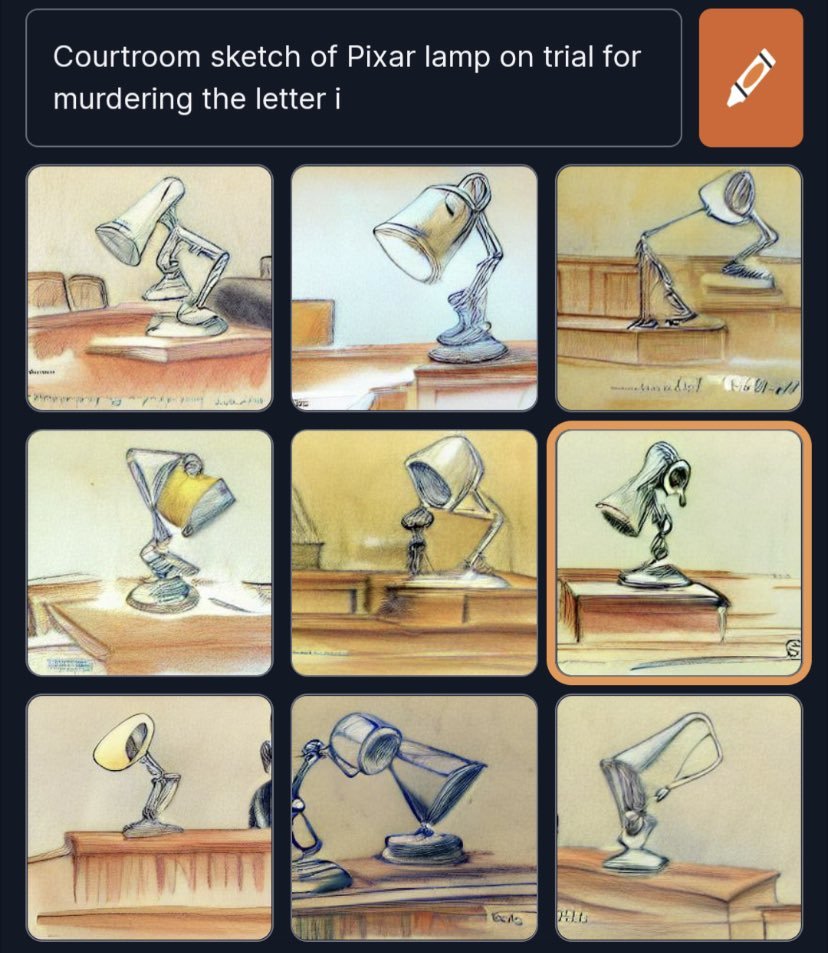 I keep reading doomsday declarations about what AI art will do to actual artists and their possibility of getting paid and at this point I’m convinced that everyone writing about this is missing the point. Artists have not been paid what they’re worth for a long time, either by exploitation or outright theft of their work. The homogenized, regurgitated slopification of art — no, I’m sorry, content — has been going on forever in the form of Save The Cat making all Hollywood movies the same, the MCU taking over cinema, the Penguin Random House/Simon and Schuster merger (including a hearing where they admitted they have no idea how books get popular), the insane scheduling requirements on Instagram to get any attention whatsoever, “crunch time” ruining game creators lives, all the way down to T-shirt bots trawling Twitter. If you read Little Women, Jo gets paid about the same amount in dollars for her short story during the Civil freaking War as a writer today would get upon winning a similar contest. I’m not saying it can’t get worse, but the idea that AI will change the fact that companies and unscrupulous individuals will do anything to avoid paying artists for their work, up to and including outright theft, by convincing them and everyone else that all “art” is essentially interchangeable, is nothing new, to the point that I wonder where the fuck anyone making these statements about AI art has been for the last ten years at least.
 But Disney is Disney. What about everyone else? I am not a lawyer, but I think this gets both easier and harder. As long as we're discussing fair use of images, Mickey Mouse at a strip club could be argued to be a parody or criticism somehow, while, say, if a drawing I made of a flower I found in my backyard was added to the data set, it would be really hard to argue anything made with it would be parody or criticism of the original work because I'm a nobody. There would be nothing specific in that image to parody or criticize because I am not known enough to parody or criticize. The use of my artwork in the dataset would strictly be used in a straightforward, instrumental fashion, and there would be no reason for them to not use any other picture of a flower. An AI using my random artistic renderings would very likely be a violation of fair use, but because of the way AI generate their images, it may be very hard to prove that my image was used unless the AI hiccupped and left my watermark in the generated image -- thus the intellectual property laundering potential of these programs.
